
Smith County Jail Release Paths
Smith County Jail is the local detention facility operated by the Smith County Sheriff’s Office. It holds people awaiting court action, people serving local terms, and some felony defendants waiting for transfer. Those groups do not leave through one uniform process. A pretrial detainee may post bond, receive recognizance release, obtain a changed bond order, or have a charge dismissed. A sentenced person may finish a misdemeanor term, receive time-served credit, move into probation after split confinement, or transfer to the Tennessee Department of Correction.
The jail register and movement record should identify when Smith County Jail custody ended. The related court order explains the legal authority. These records must be read together. A transfer entry may name TDOC, another county, a federal custodian, or immigration custody. In that case, “released from Smith County Jail” means only that this jail stopped holding the person. It does not mean the person entered the community.
A Smith County Jail non-result proves neither freedom nor transfer. Ask for the recorded release type and receiving agency.
Confirm a Smith County Release
Start with the local custodian because no official Smith County, Tennessee, release feed or searchable web roster was verified in the August 2026 research sweep. Commercial pages and the polished Smith County sheriff app found in search results may refer to Texas. The Tennessee facility is in Carthage, uses the 615 area code, and is tied to the Justice Drive complex.
- Call Smith County Jail and ask whether the named person is physically confined. If not, request the date and time custody ended.
- Ask whether the recorded event was community release, bond, time served, a court order, or transfer. Request the receiving agency when a transfer occurred.
- Seek the jail-register entry, booking sheet, release authorization, and movement or transport entry for documentary proof.
- Use the Smith County General Sessions Court page and its docket folder to locate the case, then obtain the actual judgment or order from the clerk.
- Check TDOC FOIL only when a felony sentence, state transfer, parole, or felony probation makes the state system relevant.
FOIL can show status and assigned location after TDOC intake, but system updates may not occur at the same moment as the jail transfer. VINE can supply an alert from a reporting agency. Neither substitutes for the Smith County Jail entry and court order when the exact local custody-ending event is disputed. The broader Smith County released inmate search and records path explains how to reconcile local, state, federal, and court results.
Note: Record the date of every portal check because custody data, dockets, and status labels can change after viewing.
Smith County Jail Records Contact
Address a local custody question to the jail, not to a nearby prison or a commercial directory. The current address is supported by official county court pages. Older third-party listings may still show 205 2nd Avenue West, which the research specifically rejects as stale. No published jail-records hours were verified, so call before visiting and confirm the current records coordinator and submission method.
Smith County Jail / Sheriff
322 Justice Drive
Carthage, TN 37030
615-735-2626
Call to confirm records access and current office availability.
A precise request should give the full name, date of birth when known, booking number, and a narrow date range. Ask for existing records rather than asking staff to investigate. Useful items include the jail-register entry, booking sheet, release record or order, movement or transfer entry, release date and time, recorded disposition, receiving agency, and associated identification photograph. Request lawful redaction and a cost estimate before copies are made.
Smith County Release Records Retained
The lack of a public feed should not be confused with a lack of records. Tennessee’s sheriff retention schedule gives the Jail/Inmate Register permanent status. That register includes the person’s name, offense, committing authority or process, commitment date, and release date, with descriptors in some versions. Inmate movement and booking logs are retained five years. Judgment or sentence statements and nonjudicial release orders are also kept five years under the cited schedule.
| Record | What it can establish | Retention described |
|---|---|---|
| Jail/Inmate Register | Commitment and release dates, offense, authority | Permanent |
| Movement or booking log | Booking, transport, and custody changes | Five years |
| Release order or sentence statement | Authority for release and sentence direction | Five years |
| Identification file | Photograph, fingerprints, descriptors | Life or presumed death, or 100 years |
| Property-return receipt | Items and money handed back at release | Permanent |
Retention does not guarantee unrestricted access. The custodian may apply redactions, confidentiality rules, expungement orders, or other Tennessee law. Still, naming the correct series helps when a staff member says a person is no longer displayed online. A requester can ask for inspection, electronic copies if held electronically, and the legal basis for any withheld part.
The CTAS sheriff retention schedule shows why the historical register remains more useful than a short-lived web result. It also separates the booking photo from the release entry because the files have different retention rules.
Smith County Court Release Proof
A jail label may be terse. “Court order” does not reveal whether the order changed bond, dismissed a count, awarded time served, imposed split confinement, or directed a transfer. The originating case file supplies that meaning. Smith County General Sessions Court handles misdemeanors and preliminary felony proceedings, while Circuit or Criminal Court holds the felony trial-level record after bind-over.
The county’s online access is unusual. Its official General Sessions page links to a Google Drive docket folder instead of a name-search case portal. That folder is a schedule and navigation aid, not proof of the result. Approximate court date and case number help locate the right entry. Then request the judgment, disposition, bond order, sentencing order, dismissal, or probation order from the Circuit Court Clerk.
The official clerk page documents the office that manages court records at the same Justice Drive complex. Its published contact is 322 Justice Drive, Suite 115, Carthage, TN 37030, 615-735-0500, Monday through Friday from 8 a.m. to 4 p.m.
The clerk’s official page shows its duties and office details.

This official view helps route a request for the order that explains why Smith County Jail custody ended.
Smith County State Transfer Checks
A felony transfer belongs to a different record system after TDOC accepts custody. FOIL searches current and former Tennessee felony offenders by name, TDOC ID, or State ID Number. Its detail page may show Supervision Status, Assigned Location, sentence dates, Release Eligibility Date, and parole-hearing fields. Release Eligibility Date means the earliest parole eligibility point under the applicable sentence law. It is not a guaranteed departure date.
VINE is built for current status and notifications. Search Tennessee, choose the correct person, and read the agency that supplied the result. An alert from Smith County Jail may signal a transfer, while a later TDOC alert describes a separate state event. Call the reporting agency after an alert and request the supporting record. For a local misdemeanor release, FOIL may contain nothing because its scope is Tennessee felony custody and supervision.
- Discharge
- The end of the sentence or supervision obligation, not just departure from a jail building.
- Transfer
- A move from one custodian to another while confinement continues.
- Parole
- Conditional community release before sentence expiration under state supervision.
- Split confinement
- A sentence with a jail portion followed by probation.
ICE Holds After Smith County Release
An immigration detainer changes the meaning of release from Smith County Jail. ICE describes a detainer as a request for notice before ordinary release and for custody lasting up to 48 hours beyond that point so the federal agency may assume custody. ICE also states that detainers are requests, not mandates. A Smith County movement entry may therefore close local custody with a transfer to ICE while the person remains confined.
Ask the jail record to name the receiving agency. Then use the ICE Online Detainee Locator only when an A-number, immigration hold, or documented transfer makes it relevant. ODLS covers current detention and a limited window for people recently released from ICE custody. A later ICE release would be a second event, separate from the date Smith County transferred the person.
ICE’s official detainer explanation distinguishes transfer from community release.
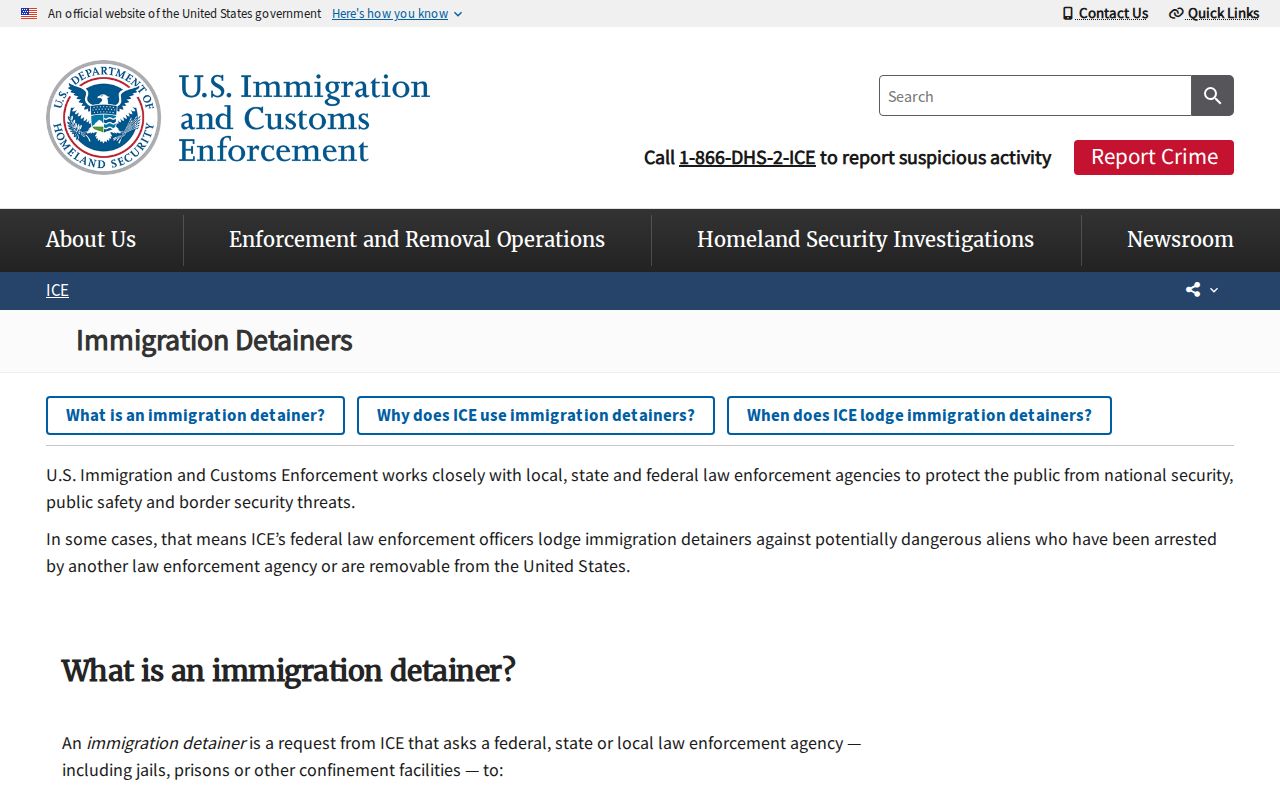
The agency’s wording supports a cautious timeline that names each custodian instead of labeling every transfer as freedom.
Note: No federal prison or dedicated ICE detention center is located at Smith County’s Justice Drive jail.
Smith County Booking Photo Records
No official Smith County web roster, recent-release photo field, or Tennessee sheriff app was verified. Request the booking or identification photograph from the sheriff with the booking sheet and release entry. The identification-file retention rule is long, but disclosure can still depend on lawful redaction, the case posture, and any expungement or confidentiality rule. A photo confirms that an image was associated with a booking. It does not establish guilt, the legal reason custody ended, or present status.
The permanent property-return receipt can add a distinctive piece of corroboration. Tennessee’s schedule describes a receipt that itemizes property, valuables, and cash returned, bears the released person’s signature, and is witnessed by the releasing officer. When lawfully accessible, it can support the physical handoff of property. It still does not replace the release entry or court order.